Photon Crystal Energy Perovskite Power-Generating Glass Opens a New Urban Green-Energy Frontier
At SNEC 2026, Photon Crystal Energy presented five perovskite power-generating glass product series for BIPV curtain walls, facades, pitched roofs, and solar carports, turning underused building surfaces into sources of urban green electricity.
Buildings account for more than 40% of society's total carbon emissions. The richest clean-energy resource in cities is not on rooftops, but across long-overlooked building facades. Curtain walls, exterior walls, and pitched roofs often provide two to three times the area of rooftops, yet they have largely remained off limits to PV. Conventional crystalline-silicon modules are opaque, their dark-blue appearance conflicts with architectural design, and they cannot readily meet structural-strength and fire-safety requirements. Perovskite power-generating glass is changing this situation.
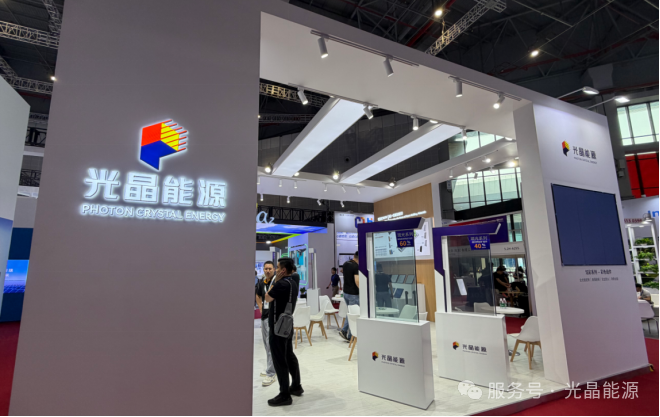
From June 3 to 5, 2026, Photon Crystal Energy presented five perovskite power-generating glass product series at SNEC in Shanghai, systematically demonstrating BIPV solutions for a wide range of urban-building scenarios.
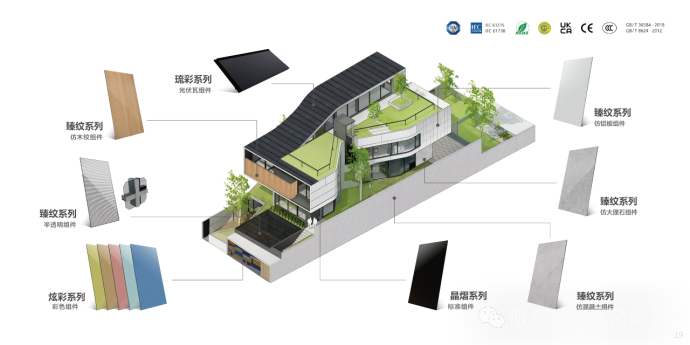
Certifications: TUV SUD IEC 61215/IEC 61730, RoHS, CGC, UKCA, CE, CCC, and UL; the products have also passed building-material tests including GB/T 36584-2018 and GB/T 8624-2012.
BIPV Curtain Walls: Power Generation Without Compromising Appearance
Glass curtain walls on urban CBD office towers and commercial complexes offer enormous surface area and excellent solar exposure, yet traditionally generate no electricity.
Challenge: Conventional crystalline silicon cannot be made transparent, offers limited color choices, and cannot readily meet curtain-wall structural-strength and fire-safety requirements.
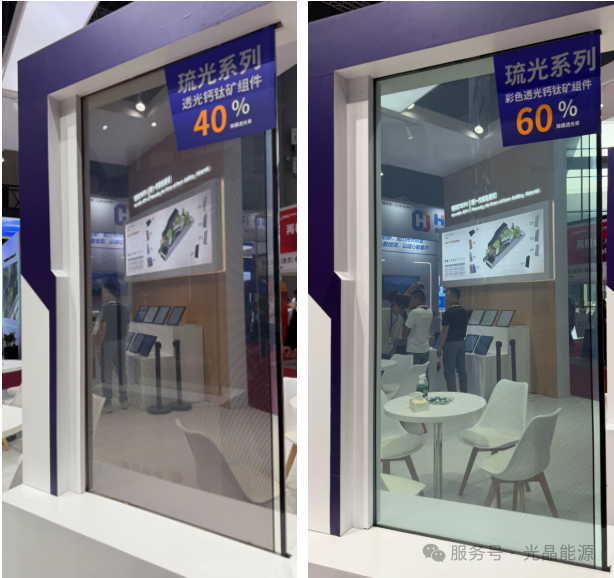
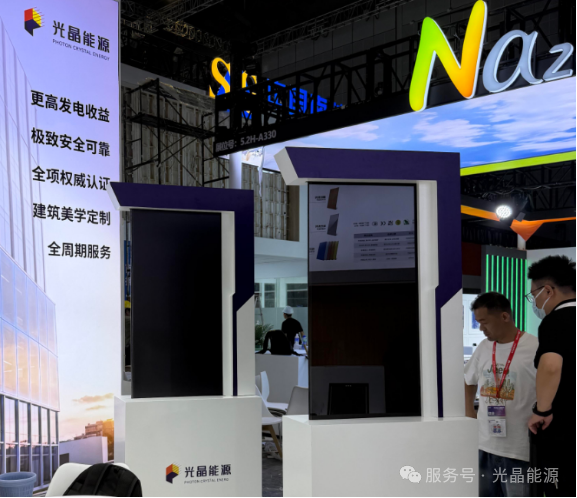
Solution: The Liuguang series of transparent PV modules can directly replace conventional curtain-wall glass. They are factory-finished and installed on site without additional structural reinforcement. Light transmittance is adjustable from 10% to 90%. In summer the glass blocks direct solar heat and reduces air-conditioning demand; in winter it admits natural light and reduces lighting demand, while generating electricity year-round for on-site use or grid connection. The material is fire resistant and has no hot-spot effect. Compared with earlier thin-film technologies such as cadmium telluride, perovskite BIPV curtain walls deliver more than 20% higher generation efficiency.
Building Facades: Architectural Texture Becomes the Generating Surface
Landmark buildings and premium commercial developments place exacting aesthetic demands on their facades, while the dark-blue appearance of crystalline-silicon modules conflicts with architectural design language.
Challenge: Conventional colored-PV solutions sacrifice generation efficiency for a narrow range of colors and struggle to combine appearance with performance.
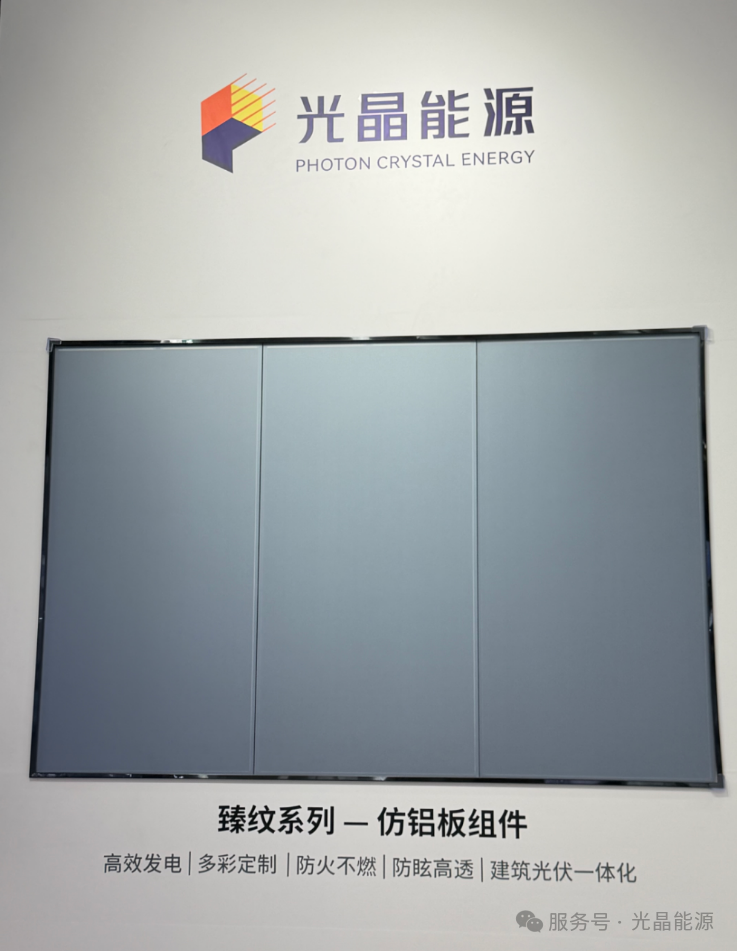
Solution: The Zhenwen series uses translucent colored-glaze technology to reproduce stone, wood grain, aluminum, and other architectural textures. From a distance it looks like a conventional stone curtain wall; up close, the surface is continuously generating power. The Xuancai series supports full-spectrum color customization, enabling corporate brand colors, decorative palettes, and gradients. Photon Crystal Energy's printing and coating process and proprietary ink formulation preserve rich colors and textures while keeping optical losses within a practical range.
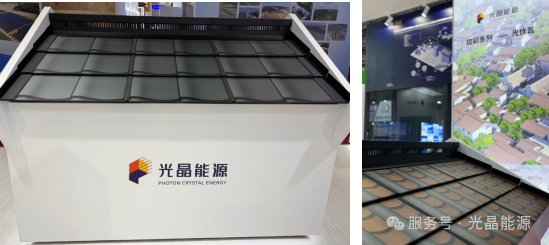
Pitched Roofs: Solar Tiles Preserve Chinese Architectural Character
Modern Chinese-style public buildings, commercial streets, and premium villas widely use pitched roofs. Conventional tiles do not generate electricity, while crystalline-silicon retrofits are expensive and disrupt the original architectural appearance.
Solution: The Liucai solar-tile series uses a dry-hung overlapping structure that directly replaces conventional roof tiles without changing the existing roof structure. It meets national building-material safety standards for waterproofing, wind resistance, hail resistance, and fire performance. Its low-current and strong low-light-response characteristics are well suited to pitched roofs with partial shading and different orientations.
Parking Areas and Solar Carports: Shade, Protection, and Clean Power
Urban parking areas are exposed to direct sunlight for long periods. High vehicle temperatures reduce comfort and increase air-conditioning electricity consumption.
Solution: The Jingyi series integrates PV building materials into carport roofs. Vehicles park in shade, substantially reducing summer cabin temperatures and air-conditioning demand. The modules convert sunlight into clean electricity for charging piles and lighting systems, creating a scenario with a clear investment return and strong owner acceptance.
For a PV curtain wall, the incremental investment in Photon Crystal Energy's perovskite power-generating glass can be recovered in about six years. Compared with ordinary curtain-wall glass, the additional cost is no more than RMB 500 per square meter. In the Yangtze River Delta and Pearl River Delta, where commercial and industrial peak electricity prices reach RMB 1.0-1.2 per kWh, facade-mounted PV generates during morning and afternoon peak-price periods. The incremental investment can therefore be recovered in approximately six years, followed by 15 to 20 years of continued generation and net returns.
Benefits extend beyond electricity revenue: summer shading reduces cooling demand, lower building emissions improve green-building ratings and carbon-accounting compliance, and better architectural aesthetics create brand value. A six-year payback is only the baseline.
During China's 15th Five-Year Plan period, urban public buildings will face increasingly demanding requirements for green-electricity replacement and carbon-emissions accounting, while zero-carbon industrial parks continue to expand nationwide.
Conventional rooftop PV is constrained by limited installation area. Building facades—including curtain walls, exterior walls, and pitched roofs—often offer two to three times the area of rooftops and represent the largest untapped PV resource in cities. Perovskite power-generating glass turns these underused surfaces into measurable electricity generation. Combined with energy storage, it can raise the proportion of on-site green electricity and provide a practical pathway toward building carbon neutrality.
Photon Crystal Energy Technology Co., Ltd. was founded in May 2022 and focuses on the research, production, and sale of high-efficiency, long-life, large-area, low-cost printable perovskite PV modules.
Core team: Returned PhDs from Australia and Peking University alumni, including one Fellow of the Australian Academy of Technological Sciences and Engineering, two professors, and multiple PhDs.
Recognition: Guangdong Specialized and Innovative SME, Top 50 in the Maker Guangdong competition, and Top 500 in the Maker China competition.
Key Facts
- Five product series at SNEC 2026
- Adjustable light transmittance from 10% to 90%
- Approximately six-year incremental payback for BIPV curtain walls
- Building facades often provide two to three times rooftop area
- Solutions for curtain walls, facades, pitched roofs, and solar carports